
Bluetongue Disease
Overview
Bluetongue (BT) is an infectious, non-contagious, vector-borne viral disease affecting domestic and wild ruminants. It is caused by the Bluetongue virus (BTV), a member of the Orbivirus genus within the Reoviridae family. Sheep are the most clinically susceptible species, while cattle, goats, buffaloes, camelids, and many wild ruminants are generally subclinically infected but play an important role in the epidemiology of the disease through prolonged viremia (FAO, 2017).
More than 30 Bluetongue virus serotypes have been identified worldwide, with several often co-circulating in endemic regions. Because protective immunity is largely serotype-specific, vaccination strategies should be tailored to the circulating serotypes. In Africa and the Mediterranean basin, BTV-1, BTV-3, BTV-4, and BTV-5 are among the serotypes of greatest veterinary importance (WOAH, 2021).
Bluetongue is endemic across much of Africa, the Middle East, Asia, the Americas, and Australia, with its distribution closely linked to that of Culicoides biting midges, the biological vectors responsible for virus transmission. In recent years, the disease has expanded into previously unaffected regions, particularly in Northern and Central Europe, driven by the emergence of serotypes such as BTV-3 and BTV-8, highlighting its evolving epidemiology and reinforcing the need for continuous surveillance and targeted vaccination programmes (Ayuti et al., 2025).
The disease has a substantial economic impact on livestock production through mortality, reduced milk and meat production, reproductive losses, decreased wool quality, and restrictions on the movement and international trade of animals and animal products (Barua et al., 2025).
Transmission
Bluetongue virus is transmitted primarily through the bite of infected Culicoides biting midges, which serve as the biological vectors of the disease. The virus is acquired when midges feed on viraemic animals and is subsequently transmitted to susceptible hosts during later blood meals. The geographic distribution and seasonal occurrence of bluetongue are therefore closely linked to the presence and activity of competent Culicoides species (WOAH, 2021).
Unlike many infectious livestock diseases, bluetongue is not transmitted by direct contact between animals under natural conditions. The movement of infected animals, windborne dispersal of infected midges, and environmental factors such as temperature and rainfall that influence vector populations are major drivers of disease spread. Although alternative routes of transmission, including vertical transmission and infected semen, have been reported for some serotypes, these are considered to have limited epidemiological significance compared with vector-borne transmission (WOAH, 2021; Barua et al., 2025).
Clinical Signs
Following an incubation period of approximately 5 to 10 days, affected animals typically develop fever and depression before the appearance of the characteristic lesions. Clinical disease is most severe in sheep, while cattle and goats often develop mild or subclinical infections despite playing an important role in virus transmission. The severity of disease depends on the virus serotype, host species, breed, and immune status (WOAH, 2021).
Common clinical signs include:
- Fever
- Depression and loss of appetite
- Facial oedema
- Ocular and nasal discharge
- Oral erosions and ulcers
- Excessive salivation
- Lameness and inflammation of the coronary band
- Cyanosis ("blue tongue") in severe cases
- Reduced milk production and weight loss
- Abortion and congenital abnormalities
- Death in severe cases
As the disease progresses, affected animals may experience prolonged recovery, reduced productivity, and secondary complications. Although mortality is generally low, susceptible sheep breeds may experience severe outbreaks with high morbidity and significant economic losses (WOAH, 2021; Ayuti et al., 2025).
Prevention and Control
Effective control of bluetongue requires an integrated approach combining vaccination, vector control, surveillance, and movement management. Because the disease is transmitted by Culicoides biting midges, reducing vector exposure, monitoring disease activity, and implementing appropriate movement restrictions are essential to limit virus spread during outbreaks (FAO, 2017).
Vaccination remains the most effective tool for preventing bluetongue. When integrated with effective vector control and surveillance programmes, it helps reduce virus circulation, protect susceptible livestock, minimize production losses, and support the safe movement of animals in endemic and at-risk areas (WOAH, 2021; Ayuti et al., 2025)
MCI Solutions
MCI Santé Animale offers a comprehensive portfolio of vaccines to support the prevention and control of bluetongue in cattle, sheep, and goats. The range includes both live attenuated and inactivated vaccines, as well as a combined vaccine providing protection against both Bluetongue and Lumpy Skin Disease.
MCI's bluetongue vaccine portfolio includes:
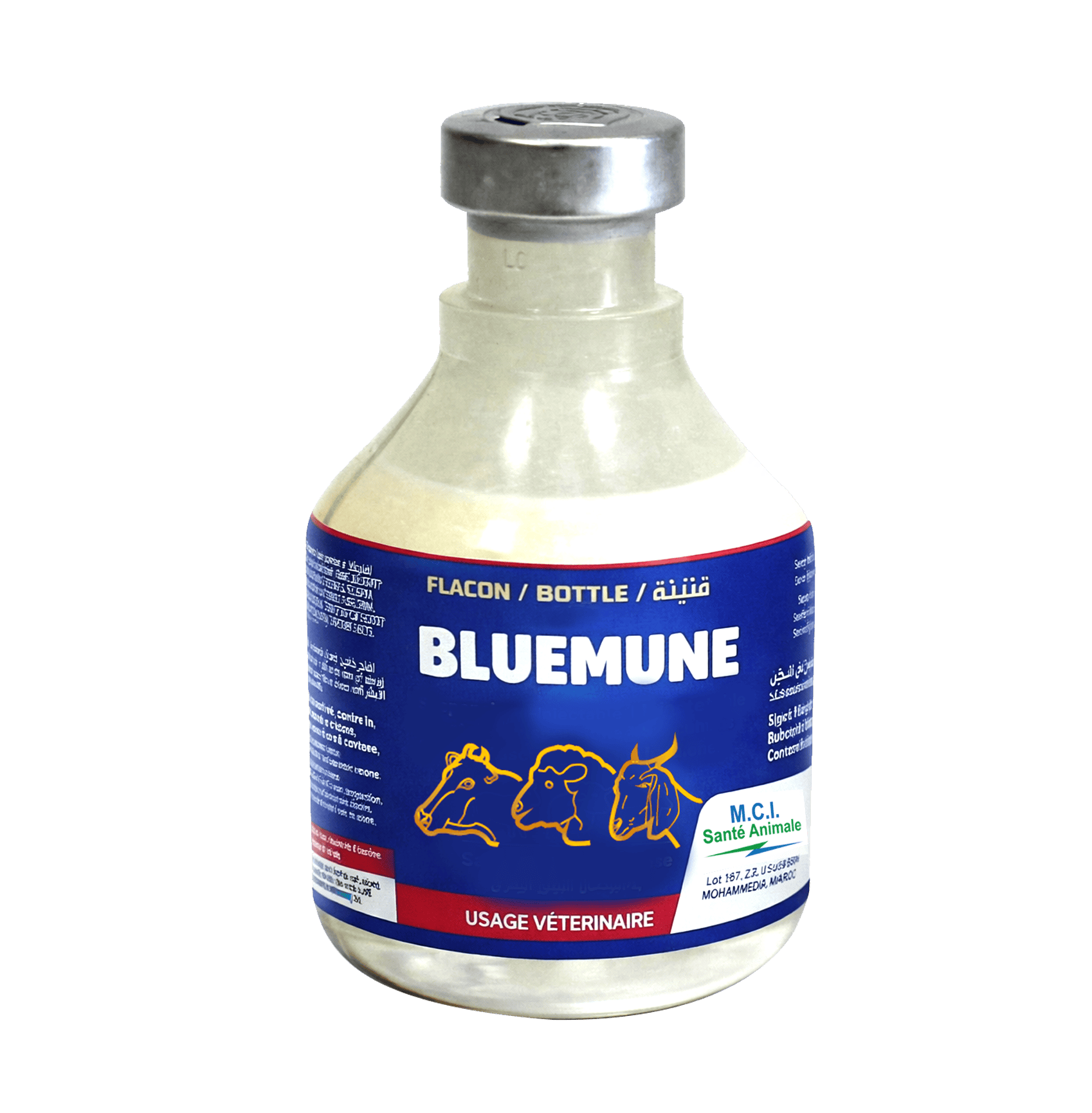
Inactivated vaccine against bluetongue disease for cattle, sheep, and goats.
View product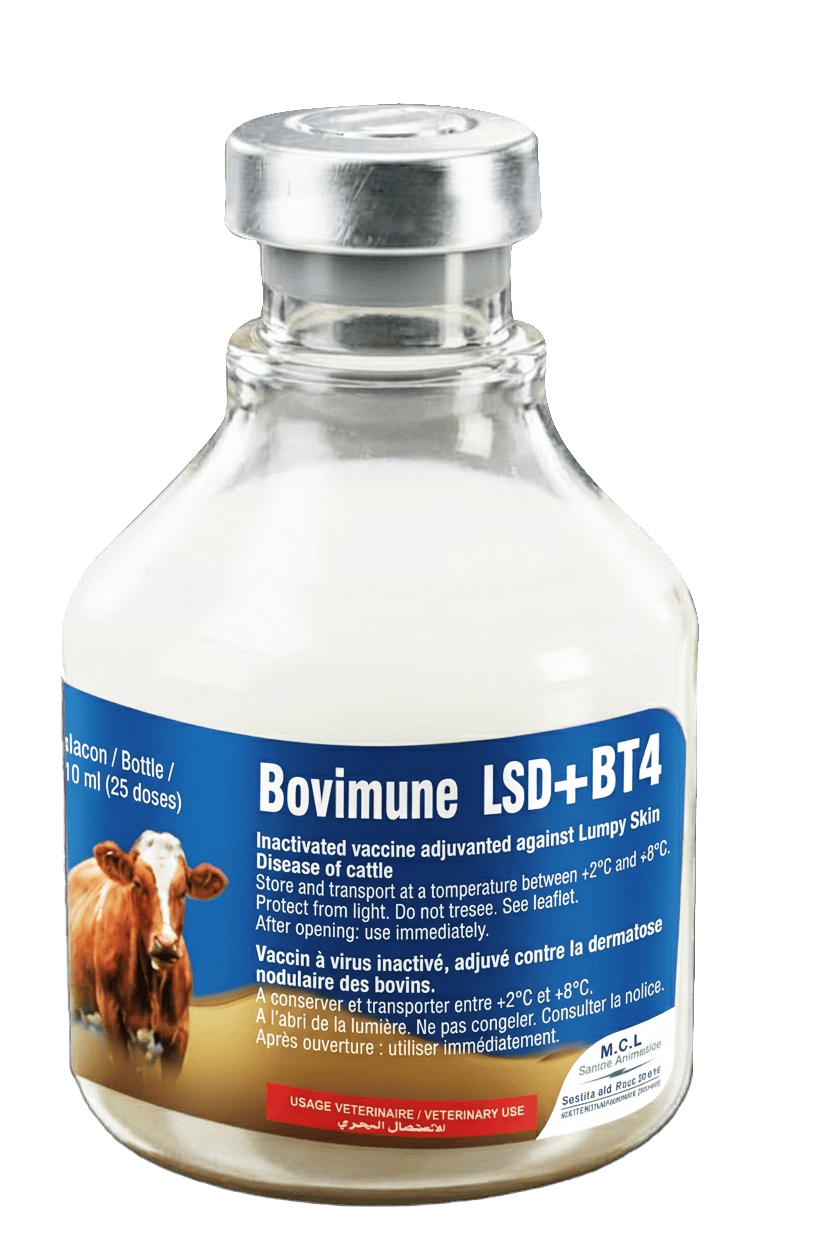
Inactivated adjuvanted vaccine against Lumpy Skin Disease (LSD) and Bluetongue (serotype 4) in cattle.
View product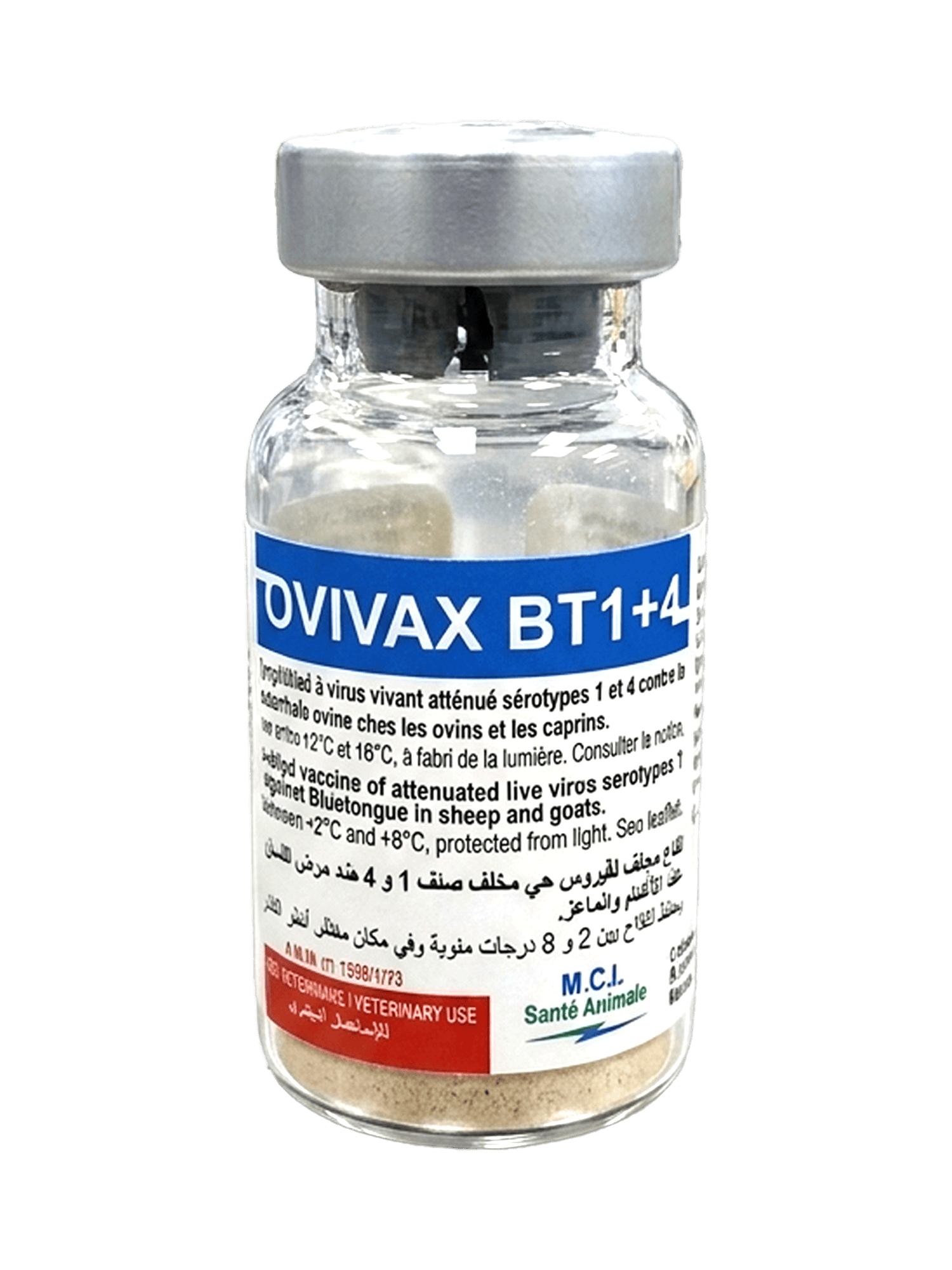
Live attenuated freeze-dried vaccine against Bluetongue virus serotypes 1 and 4 in sheep and goats.
View productReferences
Ayuti, S. R., Khairullah, A. R., Lamid, M., Warsito, S. H., Al Arif, M. A., Kim, E. J., Moses, I. B., Shin, S., Wardhani, B. W. K., Wasito, W., Khalisa, A. T., & Ahmad, R. Z. (2025). Bluetongue in ruminants: Global epidemiology, pathogenesis, and advances in diagnostic and control strategies within a One Health framework. Veterinary World, 18(10), 3070–3093. https://doi.org/10.14202/vetworld.2025.3070-3093
Barua, S., Rana, E. A., Prodhan, M. A., Akter, S. H., Gogoi-Tiwari, J., Sarker, S., Annandale, H., Eagles, D., Abraham, S., & Uddin, J. M. (2025). The global burden of emerging and re-emerging orbiviruses in livestock: An emphasis on bluetongue virus and epizootic hemorrhagic disease virus. Viruses, 17(1), 20. https://doi.org/10.3390/v17010020
Food and Agriculture Organization of the United Nations. (2017). Bluetongue. In Lumpy skin disease and bluetongue: Training of trainers. FAO.
World Organisation for Animal Health. (2021). Bluetongue (infection with bluetongue virus). In Manual of Diagnostic Tests and Vaccines for Terrestrial Animals. World Organisation for Animal Health.