
Camel pox
Overview
Camelpox is a highly contagious viral disease affecting both dromedary (Camelus dromedarius) and Bactrian (Camelus bactrianus) camels. It is caused by the Camelpox virus (CMLV), a member of the Orthopoxvirus genus within the Poxviridae family. Although genetically the closest known relative of the variola virus, which causes human smallpox, camelpox is a distinct disease that primarily affects camelids (WOAH, 2021).
The disease is endemic throughout most camel-rearing regions of Africa, the Middle East, and Asia, where it remains one of the most important infectious diseases of camels. While animals of all ages are susceptible, young camels and pregnant females are generally more severely affected. Morbidity can be high in naïve herds, whereas mortality is typically low in adults but may be considerably higher in young animals (WOAH, 2021; Balamurugan et al., 2013).
Camelpox has significant economic implications for pastoral communities by reducing milk production, body condition, and working performance, while severe outbreaks may result in mortality and trade restrictions. Given the important role of camels in food security and livelihoods across endemic regions, effective prevention and control measures are essential to minimize the disease's impact (WOAH, 2021).
Transmission
Camelpox is transmitted primarily through direct contact between infected and susceptible animals via skin lesions, respiratory secretions, and other body fluids. The virus is also shed in saliva, nasal and ocular discharges, milk, and dried scabs, allowing indirect transmission through contaminated equipment, housing, feed, water sources, and other fomites. Due to its ability to persist in dried scabs for several months, the virus can remain infectious in the environment and contribute to disease spread (WOAH, 2021; Khalafalla, 2023).
The introduction of infected animals, mixing of camel herds, and the use of shared grazing or watering points are among the main risk factors associated with outbreaks. A higher incidence is often reported during the rainy season, when increased arthropod activity may contribute to virus transmission, although the exact role of ticks and biting insects has not yet been fully established (Bayisa, 2019; WOAH, 2021).
Clinical Signs
Following an incubation period of approximately 9 to 13 days, affected camels typically develop fever and enlarged lymph nodes before the appearance of the characteristic skin lesions. Disease severity varies according to the age and immune status of the animal, with young camels and pregnant females generally experiencing more severe clinical disease (WOAH, 2021).
Common clinical signs include:
- Fever
- Enlarged lymph nodes
- Characteristic skin lesions and scab formation
- Ocular and nasal discharge
- Salivation
- Loss of appetite
- Diarrhea
- Secondary bacterial infections
- Abortion in pregnant females
- Increased mortality in young animals
As the disease progresses, skin lesions may become generalized, affecting large areas of the body and, in severe cases, the mucous membranes. Although most adult camels recover, convalescence may be prolonged, with affected animals experiencing reduced body condition, milk production, and working performance (WOAH, 2021; Balamurugan et al., 2013).
Prevention and Control
Effective control of camelpox relies on a combination of biosecurity, surveillance, and vaccination. Early detection and prompt isolation of affected animals are essential to limit virus spread, while movement restrictions should be implemented during outbreaks. Good hygiene practices, including thorough cleaning and disinfection of equipment, housing, and other contaminated materials, are particularly important because the virus can persist in dried scabs for extended periods (WOAH, 2021).
An integrated prevention strategy combining vaccination with effective biosecurity and herd health management is essential for reducing the burden of camelpox. In endemic areas, prophylactic vaccination remains the best protection for animals.
MCI Solutions
MCI Santé Animale offers both live attenuated and inactivated vaccines to support the prevention and control of camelpox, enabling vaccination strategies tailored to different epidemiological situations and herd health requirements.
MCI's camelpox vaccine portfolio includes:
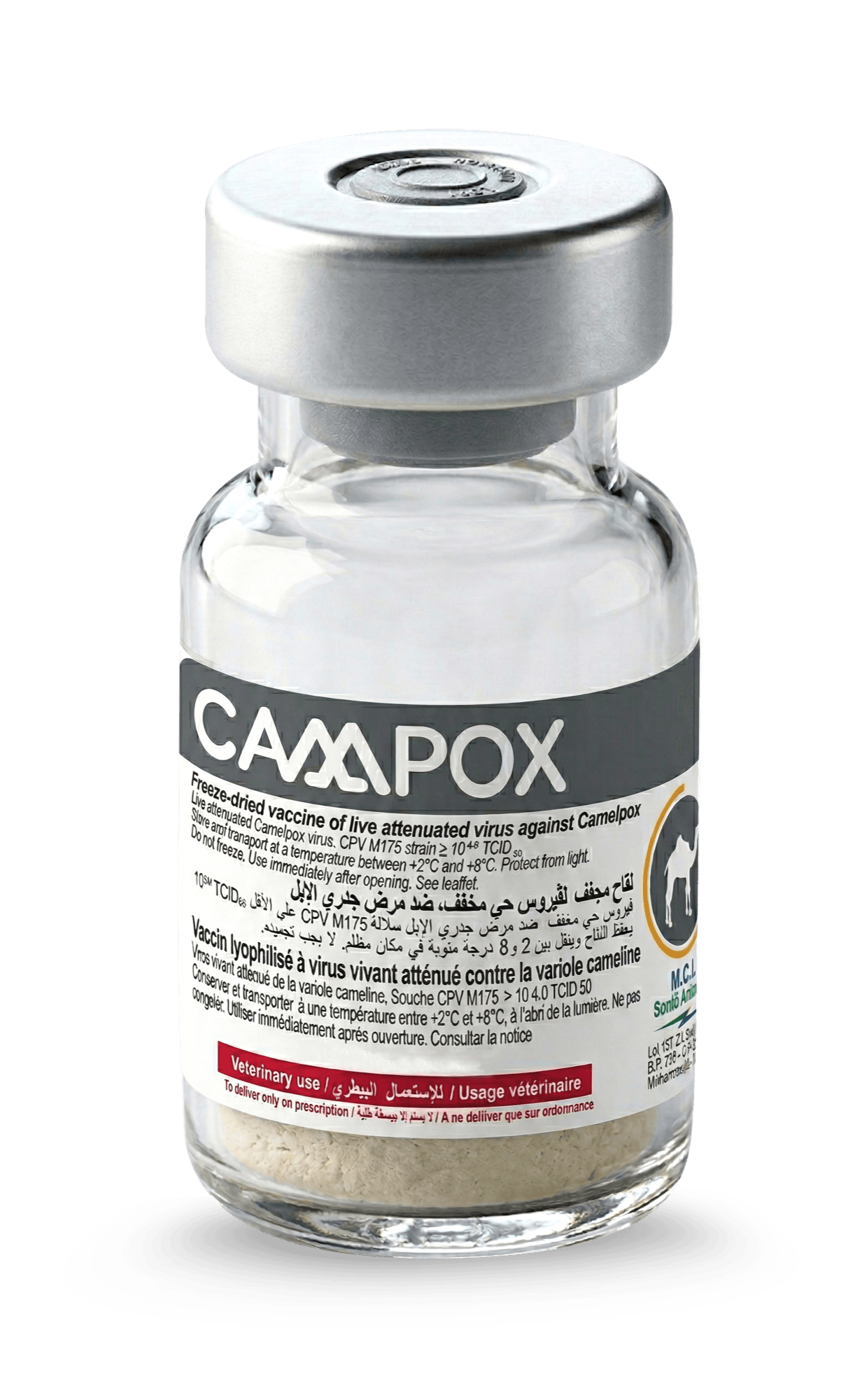
Live attenuated vaccine indicated for the active immunization of camels against camelpox, providing long-lasting protection.
View product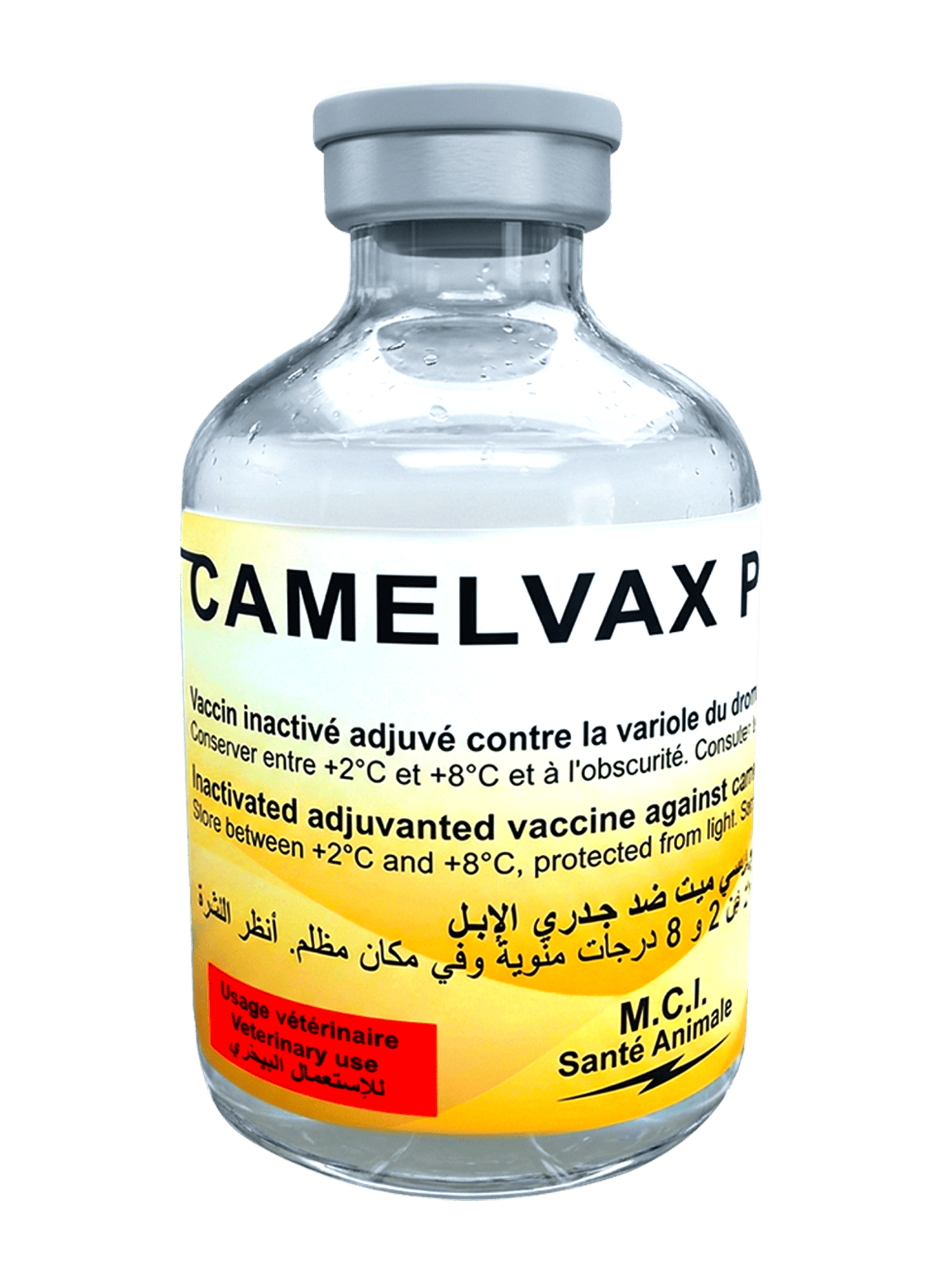
Inactivated adjuvanted vaccine indicated for the prevention of camelpox in camels, expanding vaccination options to meet different herd health strategies.
View productReferences
Balamurugan, V., Venkatesan, G., Bhanuprakash, V., & Singh, R. K. (2013). Camelpox, an emerging orthopox viral disease. Indian Journal of Virology. https://doi.org/10.1007/s13337-013-0145-0
Bayisa, D. A. (2019). Review on camel pox: Epidemiology, public health and diagnosis. ARC Journal of Animal and Veterinary Sciences, 5(4), 22–33.
Khalafalla, A. I. (2023). Zoonotic diseases transmitted from the camels. Frontiers in Veterinary Science, 10, 1244833. https://doi.org/10.3389/fvets.2023.1244833
World Organisation for Animal Health. (2021). Camelpox. In Manual of Diagnostic Tests and Vaccines for Terrestrial Animals. World Organisation for Animal Health.