Newcastle Disease (ND)
Overview
Newcastle disease (ND) is a highly contagious viral disease affecting a wide range of domestic and wild bird species. It is caused by virulent strains of Avian orthoavulavirus 1 (AOAV-1), formerly known as avian paramyxovirus type 1 (APMV-1). It is one of the most important diseases in the global poultry industry due to its substantial economic impact, resulting from high mortality, reduced meat and egg production, and trade restrictions imposed during outbreaks. The disease presents with a wide spectrum of clinical manifestations, ranging from mild respiratory infections to severe systemic disease associated with high mortality (WOAH, 2021).
Etiology and Virus Characteristics
Newcastle disease virus belongs to the family Paramyxoviridae, genus Orthoavulavirus, and corresponds to Avian orthoavulavirus 1 (AOAV-1). It is an enveloped virus with a non-segmented, single-stranded negative-sense RNA genome of approximately 15.2 kb (WOAH, 2021).
The viral genome encodes six major structural proteins:
- Nucleoprotein (NP)
- Phosphoprotein (P)
- Matrix protein (M)
- Fusion protein (F)
- Hemagglutinin-neuraminidase (HN)
- Large polymerase protein (L)
The fusion (F) protein is one of the principal determinants of viral virulence.
Classification of NDV Strains According to Virulence
| Pathotype | Characteristics |
|---|---|
| Lentogenic | Low virulence; primarily causes mild respiratory disease |
| Mesogenic | Intermediate virulence |
| Neurotropic velogenic | Severe disease with predominant neurological signs |
| Viscerotropic velogenic | Highly virulent form characterized by digestive lesions and high mortality |
Circulating strains are also classified into multiple genotypes. Genotype VII is currently associated with most major outbreaks reported worldwide (Hy-Line, 2025).
Pathogenesis and Immunity
Following entry through the respiratory or digestive tract, the virus replicates in the respiratory and intestinal epithelium before spreading via the bloodstream to various organs.
Disease severity depends on several factors, including:
- Viral strain virulence;
- Age of the birds;
- Immune status of the flock;
- Infectious dose;
- Environmental conditions.
| Factor | Influence on Disease |
|---|---|
| Young birds | Increased susceptibility |
| Maternal antibodies | Temporary protection |
| Vaccination | Reduces clinical signs and mortality |
| Immunosuppression | Exacerbates infection |
Maternal antibodies provide early protection but may interfere with certain vaccination programs. Protective immunity relies on both humoral and cell-mediated immune responses.
Transmission
Newcastle disease is transmitted primarily through horizontal transmission.
Infected birds shed the virus in:
- Respiratory secretions;
- Feces;
- Ocular secretions.
Transmission occurs through direct contact between birds or indirectly via:
- Contaminated feed and water;
- Poultry equipment;
- Clothing and footwear of farm personnel;
- Cages and transportation equipment;
- Asymptomatic wild birds.
The virus can survive for several weeks in the environment, particularly at low temperatures and in the presence of organic matter.
Clinical Signs and Lesions
The incubation period generally ranges from 2 to 15 days.
Clinical manifestations vary according to the viral pathotype.
| Clinical Signs | Typical Lesions |
|---|---|
| Depression | Tracheal congestion |
| Dyspnea and respiratory rales | Intestinal hemorrhages |
| Coughing and sneezing | Hemorrhagic lesions of the proventriculus |
| Greenish diarrhea | Necrotic enteritis |
| Torticollis | Pulmonary congestion |
| Paralysis of wings and legs | Periorbital edema |
| Drop in egg production | Ovarian atrophy |
| High mortality | Multifocal hemorrhages |
In viscerotropic forms, characteristic hemorrhages are observed in the cecal tonsils and proventriculus.
Mortality may reach 100% in susceptible flocks infected with highly virulent strains.
Diagnosis
Diagnosis is based on the combination of:
- Clinical findings;
- Epidemiological information;
- Post-mortem lesions.
Differential Diagnosis
Newcastle disease should be differentiated from:
- Highly pathogenic avian influenza;
- Infectious bronchitis;
- Infectious laryngotracheitis;
- Fowl cholera;
- Avian encephalomyelitis;
- Various toxicities.
Definitive diagnosis relies on:
- Virus isolation;
- Hemagglutination inhibition (HI) test;
- ELISA;
- RT-PCR;
- Genetic sequencing.
Prevention and Control
Effective prevention of Newcastle disease relies on a combination of strict biosecurity measures and appropriate vaccination programs.
Key biosecurity measures include:
- Control of animal movements;
- Regular cleaning and disinfection of poultry houses;
- Prevention of contact with wild birds;
- Visitor access control;
- Implementation of the all-in/all-out production system.
Vaccination
Vaccination remains the cornerstone of Newcastle disease prevention.
| Vaccine Type | Examples |
|---|---|
| Live attenuated vaccines | B1, Hitchner B1, LaSota |
| Inactivated vaccines | Oil-emulsion layer vaccines |
| Recombinant vaccines | HVT- or FPV-vectored vaccines |
| Genotype VII homologous vaccines | Recommended in areas with high infection pressure |
Vaccination programs should be adapted according to maternal antibody levels, production type, and the local epidemiological situation.
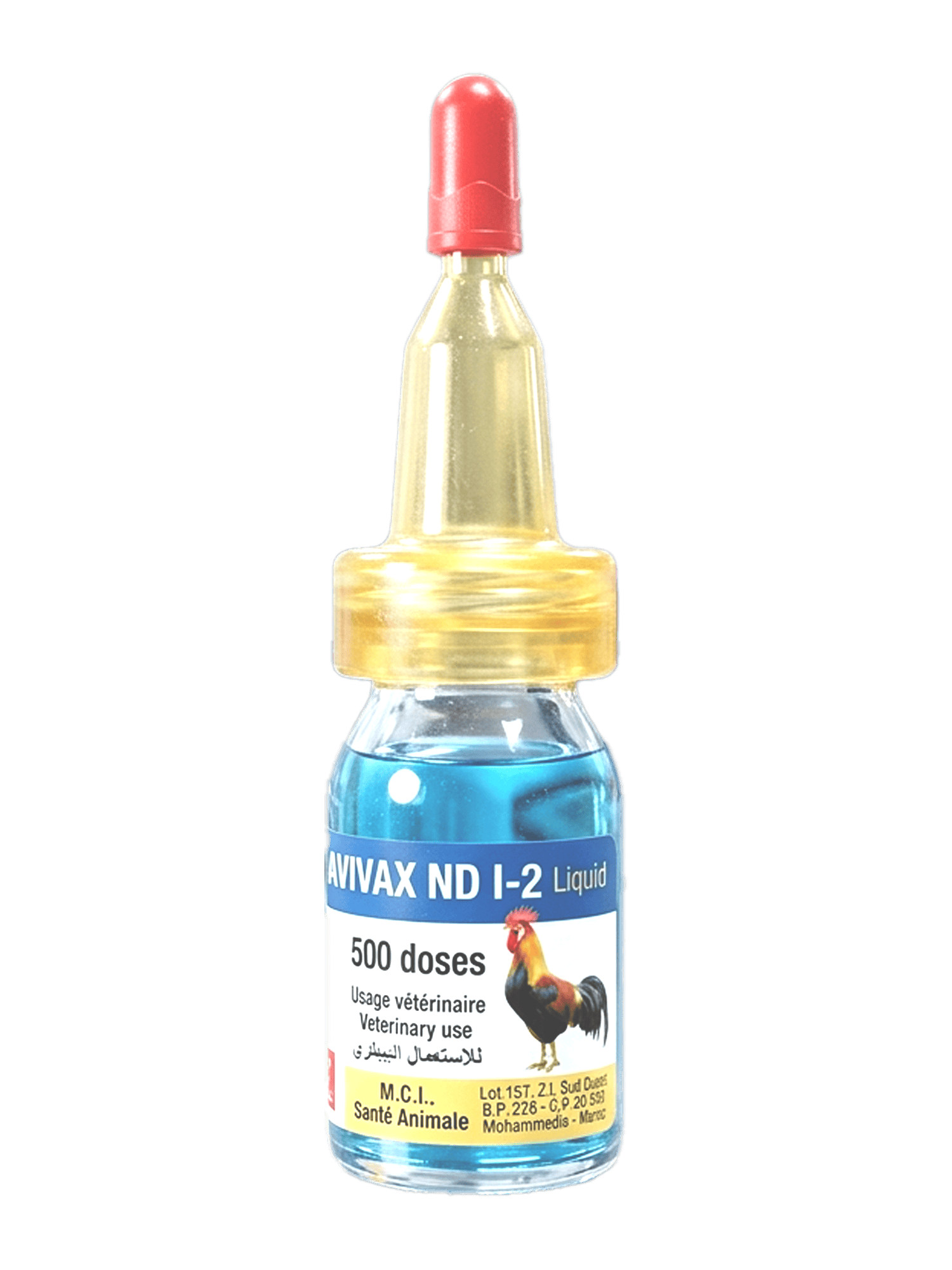
MCI Solutions
MCI Santé Animale offers a vaccine solution for the prevention of Newcastle disease in poultry.
MCI's Newcastle disease vaccine portfolio includes: