
Peste des Petits Ruminants (PPR): a major transboundary disease of sheep and goats
Peste des Petits Ruminants (PPR) is a highly contagious viral disease affecting sheep and goats. It is caused by an RNA virus of the genus Morbillivirus, belonging to the Paramyxoviridae family.
PPR causes significant economic losses, mainly due to its high mortality rate, reduced livestock productivity and the trade restrictions associated with the disease.
Listed as a notifiable disease by the World Organisation for Animal Health (WOAH), PPR is subject to a global eradication strategy jointly led by WOAH and the Food and Agriculture Organization of the United Nations (FAO), with the objective of eradicating the disease by 2030.
Geographical distribution
First described in West Africa in the 1940s, PPR has progressively spread throughout the African continent, the Middle East and many countries in Asia.
More recently, since July 2024, the disease has re-emerged in Southeastern Europe, with outbreaks reported in several countries, including Greece, Romania, Bulgaria, Hungary, Albania, Kosovo and Croatia. These outbreaks highlight the continued risk of cross-border spread and the importance of sustained surveillance and control measures.
Today, the disease is present in more than 70 countries and threatens nearly 80% of the world's small ruminant population.
In Morocco, the first PPR outbreak was recorded in 2008, with more than 250 outbreaks reported. The implementation of large-scale vaccination campaigns, combined with epidemiological surveillance and animal movement control, has helped bring the disease under control. No major outbreaks have been reported in recent years.
Transmission
PPR is primarily transmitted through direct contact between infected and susceptible animals. The virus is mainly spread through respiratory secretions released during coughing or sneezing.
Contaminated drinking troughs, feeders and bedding can also contribute to virus spread. However, the virus has low environmental resistance and survives for a relatively short period outside its host.
Clinical signs
Following an incubation period generally ranging from 3 to 6 days, the disease may be characterized by:
- High fever, generally above 40 °C;
- Marked depression and anorexia;
- Serous nasal discharge progressing to profuse mucopurulent discharge;
- Conjunctivitis accompanied by lacrimation and adhesion of the eyelids;
- Erosive and necrotic lesions of the oral cavity, particularly affecting the gums, palate, tongue and cheeks;
- Severe diarrhea, potentially resulting in dehydration and weight loss;
- Pneumonia, particularly at advanced stages of the disease;
- Abortions.
Young animals are particularly susceptible to the disease, with goats generally developing more severe clinical forms than sheep.
Advancing PPR control through vaccine expertise
Since 2016, MCI Santé Animale has been selected as a PPR Vaccine Bank for Africa and Asia, thereby contributing to disease prevention, control and eradication programmes.
Through a range of vaccine solutions, MCI Santé Animale supports efforts to control this major transboundary disease, which remains endemic in many regions of Africa and Asia.
Since 2025, MCI Santé Animale’s live attenuated vaccine has also been registered by the FAO as a reference vaccine for PPR control programmes.
Vaccine solutions against PPR
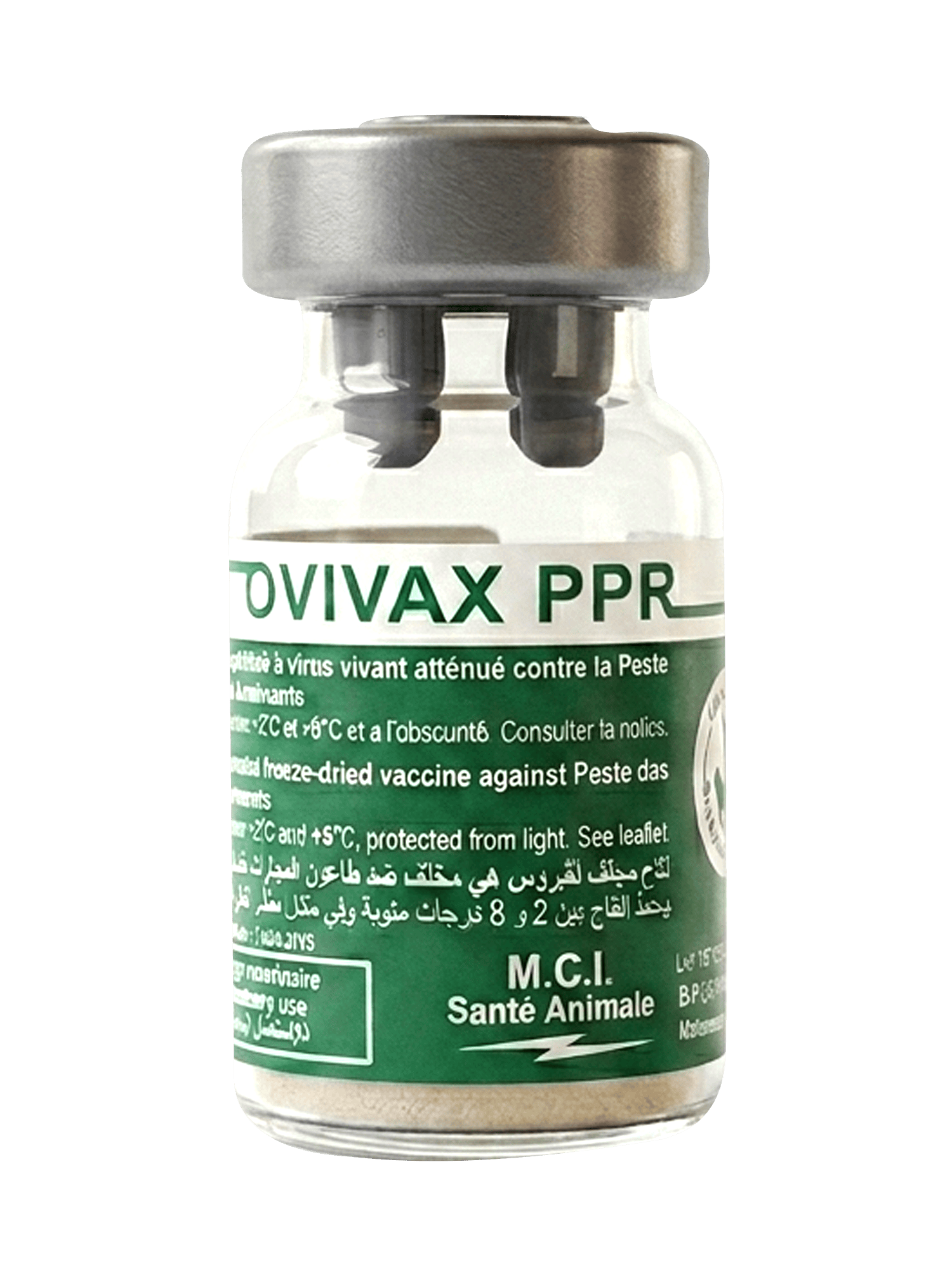
Live attenuated vaccine
Live attenuated vaccines based on the Nigeria 75/1 strain have historically been the reference vaccine for the control of PPR. Recognized by WOAH, it is widely used in mass vaccination campaigns due to its strong immunogenicity and ability to provide long-lasting protection following a single administration.
The vaccine plays a central role in Phase 2 – Disease Control of the PPR eradication programme led by WOAH and FAO.
Combination vaccines
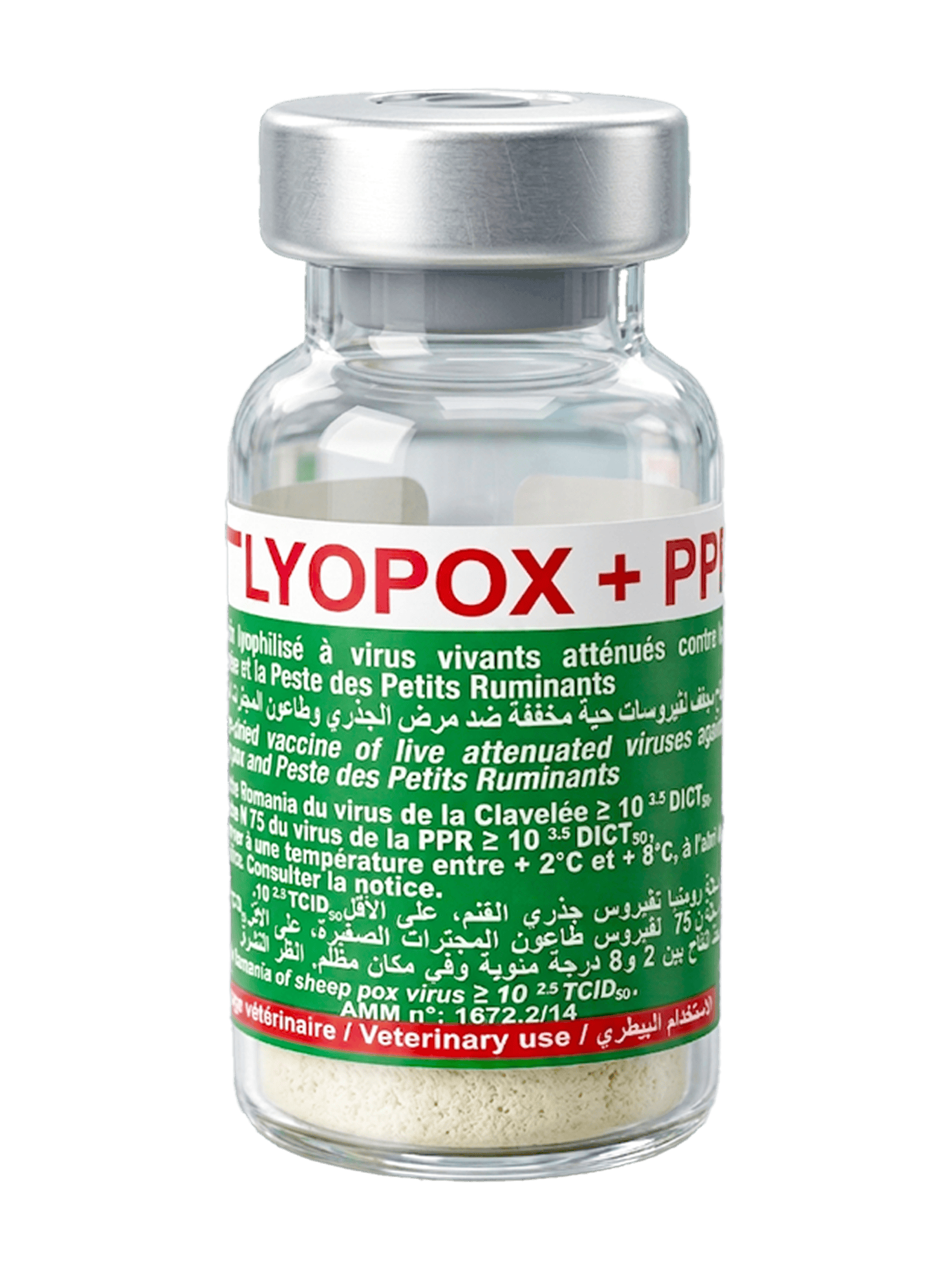
This combined sheep and goat pox vaccine offers the advantage of targeting two major viral diseases affecting small ruminants in a single vaccination. By providing protection against both diseases with one shot, it can help simplify vaccination programs, reduce handling and animal stress, and improve vaccination coverage. This combined approach can also contribute to more efficient herd health management while reducing the time and resources required for vaccination campaigns.
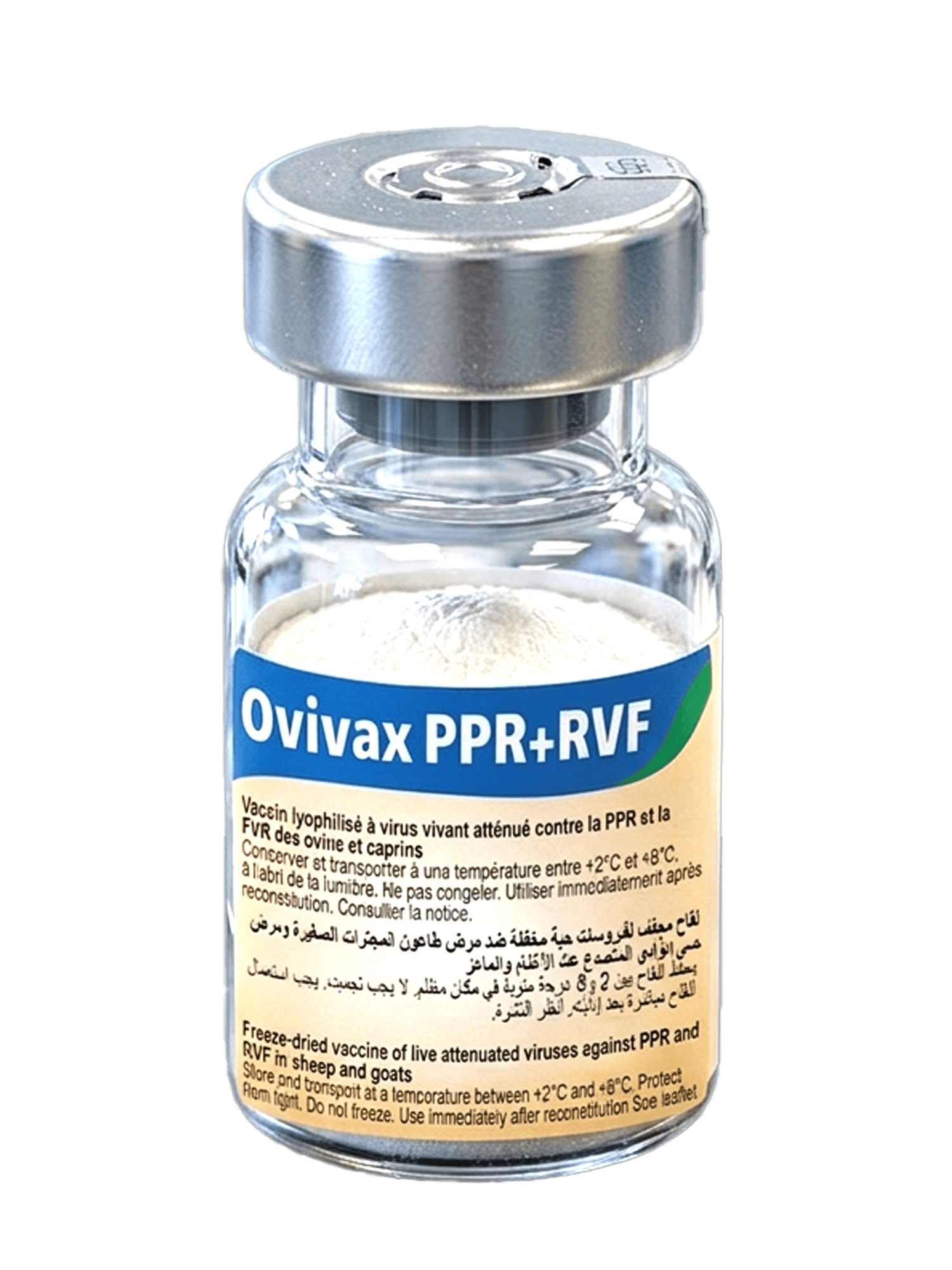
This combination makes it possible to target two diseases of significant animal health and economic importance simultaneously, particularly in areas where Rift Valley fever represents a significant risk.
Rift Valley fever (RVF) is endemic across large parts of Africa and has a devastating impact on livestock production and the livelihoods of affected communities; however, regular RVF vaccination is not currently implemented. As small ruminants are among the livestock species most affected by RVF and are routinely targeted for PPR vaccination, incorporating RVF into combination vaccines administered alongside or as part of established PPR vaccination programmes could provide a practical approach to building and maintaining the herd immunity required to reduce the impact and spread of RVF.
Inactivated vaccine
Inactivated vaccines provide an alternative approach in certain disease control strategies, particularly due to their safety profile.
Inactivated adjuvanted vaccine against Peste des Petits Ruminants.
Recombinant DIVA vaccine
New vaccine technologies can contribute to the advanced stages of PPR control and eradication, where the objective is to progressively reduce virus circulation until its elimination.
PPR-DIVA (Differentiating Infected from Vaccinated Animals) recombinant vaccines enable vaccinated animals to be distinguished from animals that have been naturally infected, using appropriate diagnostic tools.
This characteristic facilitates epidemiological surveillance, the detection of residual virus circulation and the demonstration of the absence of infection within animal populations. It can therefore contribute to the recognition and maintenance of PPR-free zones or countries, with or without vaccination, as well as to the protection of international trade.
A recombinant, replication-defective, adenovirus-vectored vaccine expressing the H surface glycoprotein of Peste des Petits Ruminants virus (PPRV).
The vaccine provides a DIVA capability and would therefore be suitable for use when the current live attenuated PPR vaccines are withdrawn at the end of the ongoing global PPR eradication program.
Sources
FAO (2008). Outbreak of “Peste des Petits Ruminants” in Morocco. Food and Agriculture Organization of the United Nations.
FAO (2025). Peste des Petits Ruminants (PPR) – Global Control and Eradication Programme. Food and Agriculture Organization of the United Nations.
WOAH (2025). Peste des Petits Ruminants (PPR). World Organisation for Animal Health.
MSD Veterinary Manual (2026). Peste des Petits Ruminants. Merck & Co., Inc.