
Rift Valley Fever
Overview
Rift Valley fever (RVF) is a highly impactful mosquito-borne viral disease that primarily affects sheep, goats, cattle, and camels, while also posing a significant zoonotic risk to humans. It is caused by the Rift Valley fever virus (RVFV), a member of the genus Phlebovirus (family Phenuiviridae), and comprises a single serotype (WOAH, 2023).
The disease is endemic across much of sub-Saharan Africa and has also been reported in North Africa (particularly Egypt) and the Arabian Peninsula. Frequent outbreaks occurs in East Africa, Horn of Africa and Southern Africa. Although West Africa has historically been less affected than East Africa, outbreaks have become increasingly frequent over the last two decades as evidenced by the recent outbreaks (2026) in Senegal, Mauritania, and The Gambia highlighting the persistent regional threat posed by the disease (FAO, 2018; WOAH, 2023).
RVF has a major economic impact on the livestock sector. Outbreaks are associated with high abortion rates, neonatal mortality, reduced milk production, decreased animal productivity, and restrictions on livestock movement and international trade. These losses can severely affect pastoral and smallholder communities that rely on livestock for their livelihoods, making RVF an important One Health disease with significant veterinary, public health, and socioeconomic consequences (O'Neill et al., 2024; Rostal et al., 2025).
Transmission
Rift Valley fever virus (RVFV) is primarily transmitted through the bites of infected mosquitoes, particularly species belonging to the Aedes and Culex genera. Outbreaks typically occur following periods of heavy rainfall and flooding, which create ideal breeding conditions for mosquito populations and increase virus transmission among susceptible animals (WOAH, 2023).
Infected livestock develop high levels of virus in their blood, allowing mosquitoes to acquire and subsequently transmit the virus to other animals. Vertical transmission within certain mosquito species has also been reported, enabling the virus to persist in mosquito eggs during inter-epidemic periods and re-emerge when environmental conditions become favourable (FAO, 2018; Rostal et al., 2025).
Humans are infected mainly through direct contact with the blood, tissues, or body fluids of infected animals during slaughtering, veterinary procedures, animal handling, or necropsy. Infection may also occur through bites from infected mosquitoes, while person-to-person transmission has not been documented (Nadeem et al., 2023; FAO, 2018).
Clinical Signs
The severity of Rift Valley fever varies according to the animal species, age, and physiological status. Young animals are the most susceptible and often develop acute disease with high mortality rates, while adult animals generally experience milder clinical signs. A hallmark of RVF is the occurrence of abortion storms in pregnant animals, particularly during outbreaks (WOAH, 2023; FAO, 2018).
- Sheep and Goats
Sheep are the most severely affected species. Mortality in newborn lambs can approach 90–100% during epidemic outbreaks, while pregnant ewes frequently abort regardless of the stage of gestation. Clinical signs include fever, depression, anorexia, weakness, nasal discharge, diarrhea, jaundice, and sudden death. Goats develop similar signs but generally experience lower mortality than sheep (FAO, 2018).
- Cattle
In cattle, RVF is characterized by fever, depression, loss of appetite, reduced milk production, abortion, and mortality in young calves. Adult cattle usually develop milder disease but can experience significant reproductive losses during outbreaks (WOAH, 2023).
- Camels
Camels are now recognized as highly susceptible to RVF. Clinical signs include fever, abortion, neonatal mortality, and occasional sudden death, with outbreaks causing important reproductive and production losses (WOAH, 2023).
Prevention and Control
Preventing Rift Valley fever requires a comprehensive strategy that combines vaccination, surveillance, vector control, and biosecurity. Because RVF outbreaks are strongly influenced by climatic conditions that promote mosquito breeding, preparedness and timely intervention are essential to reduce disease transmission and limit economic losses (FAO, 2018; WOAH, 2023).
Vaccination remains the cornerstone of RVF prevention. Strategic immunization helps protect susceptible livestock, reduce abortion storms and neonatal mortality, limit virus circulation, and mitigate the economic impact of outbreaks. As part of an integrated disease control strategy, vaccination plays a critical role in safeguarding animal health, improving livestock productivity, and supporting sustainable livestock production (WOAH, 2023; FAO, 2018).
MCI Solutions
MCI Santé Animale offers live attenuated vaccines to support the prevention and control of Rift Valley fever in livestock. Designed for use in endemic and at-risk regions, MCI's vaccine portfolio helps protect susceptible animals, reduce the impact of outbreaks, and support effective herd health management.
MCI's Rift Valley fever vaccine portfolio includes:
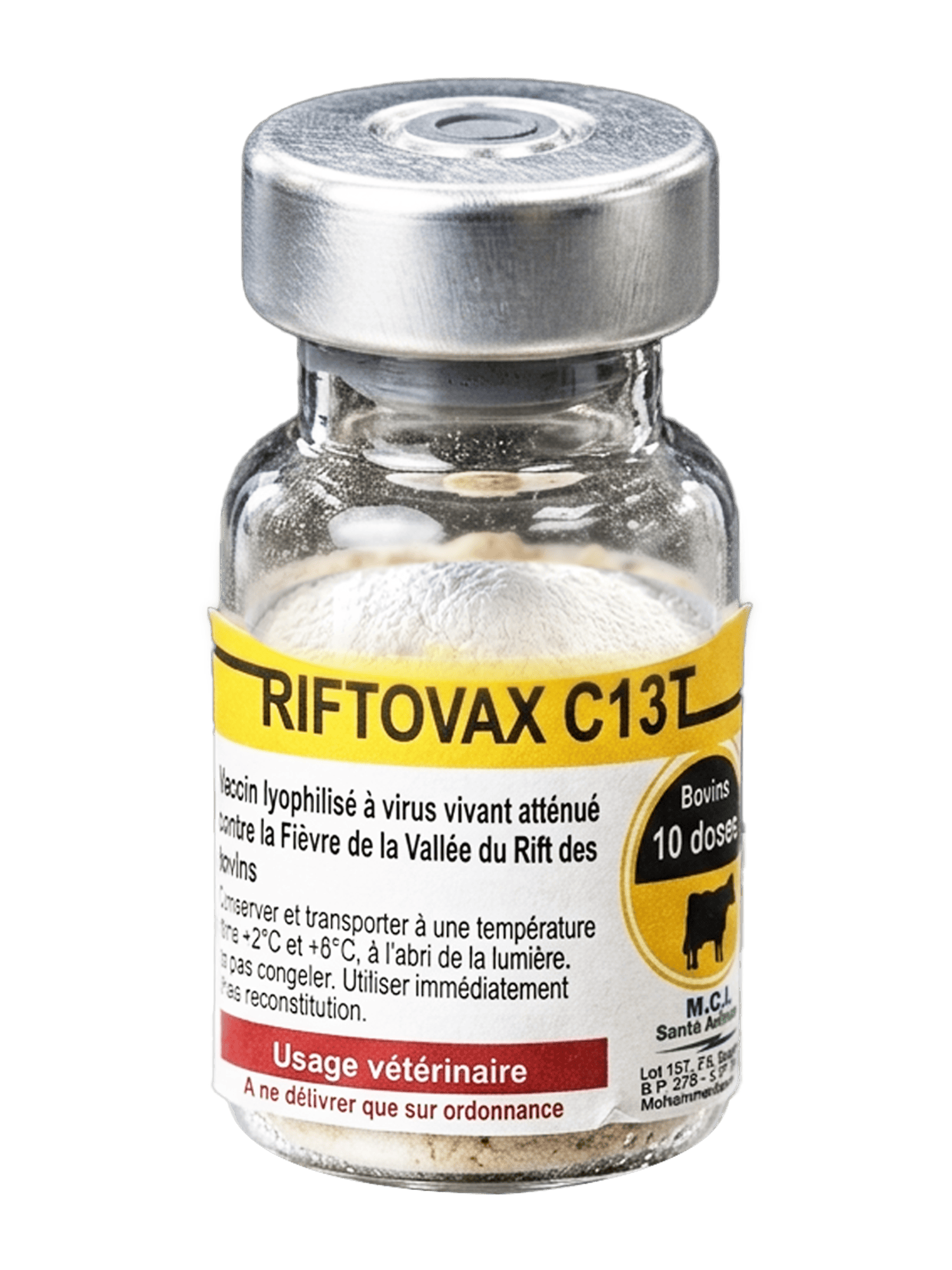
Freeze-dried live attenuated vaccine indicated for the active immunization of sheep, goats, cattle, and camels against Rift Valley fever.
View product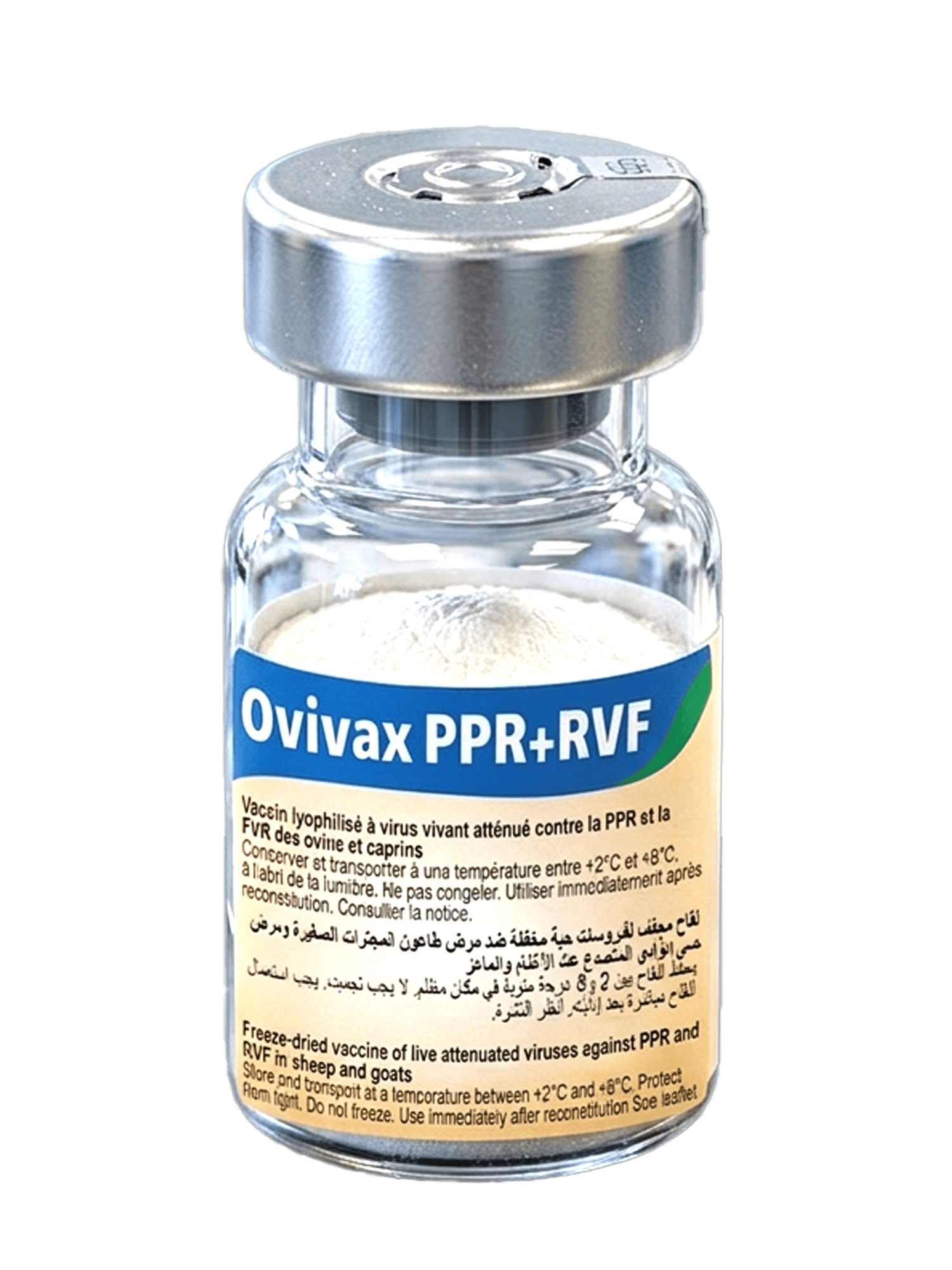
Freeze-dried live attenuated bivalent vaccine indicated for the active immunization of sheep and goats against Rift Valley fever and Peste des Petits Ruminants (PPR), providing simultaneous protection against both diseases.
View productReferences
Food and Agriculture Organization of the United Nations. (2018). Rift Valley fever surveillance (FAO Animal Production and Health Manual No. 21). FAO.
Nadeem, L., Irshad, Z., Abedin, M. Z.-U., Hussain, A., Irfan, W., Raza, A., Usman, S. M., Channo, A., & Naseem, C. (2023). Overview of Rift Valley Fever. In R. Z. Abbas, M. F. Hassan, A. Khan, & M. Mohsin (Eds.), Zoonosis (Vol. 2, pp. 89–100). Unique Scientific Publishers. https://doi.org/10.47278/book.zoon/2023.54
O'Neill, L., Gubbins, S., Reynolds, C., Limon, G., & Giorgakoudi, K. (2024). The socioeconomic impacts of Rift Valley fever: A rapid review. PLOS Neglected Tropical Diseases, 18(8), e0012347. https://doi.org/10.1371/journal.pntd.0012347
Rostal, M. K., Thompson, P. N., Anyamba, A., Bett, B., Cêtre-Sossah, C., Chevalier, V., Guarido, M., Karesh, W. B., Kemp, A., LaBeaud, A. D., Lubisi, A., Matthews, L., Msimang, V., Njenga, M. K., Ross, N., Tumusiime, D., Wilson, W. C., Weyer, J., Paweska, J. T., & Swanepoel, R. (2025). Rift Valley fever epidemiology: Shifting the paradigm and rethinking research priorities. The Lancet Planetary Health, 9. https://doi.org/10.1016/S2542-5196(25)101299
World Organisation for Animal Health. (2023). Manual of Diagnostic Tests and Vaccines for Terrestrial Animals: Chapter 3.1.19. Rift Valley fever (Infection with Rift Valley fever virus). WOAH.